 TheBodyBlueprint
Energy Balance Mechanisms
Fundamental explanation of how energy intake and expenditure influence body composition at the physiological level.
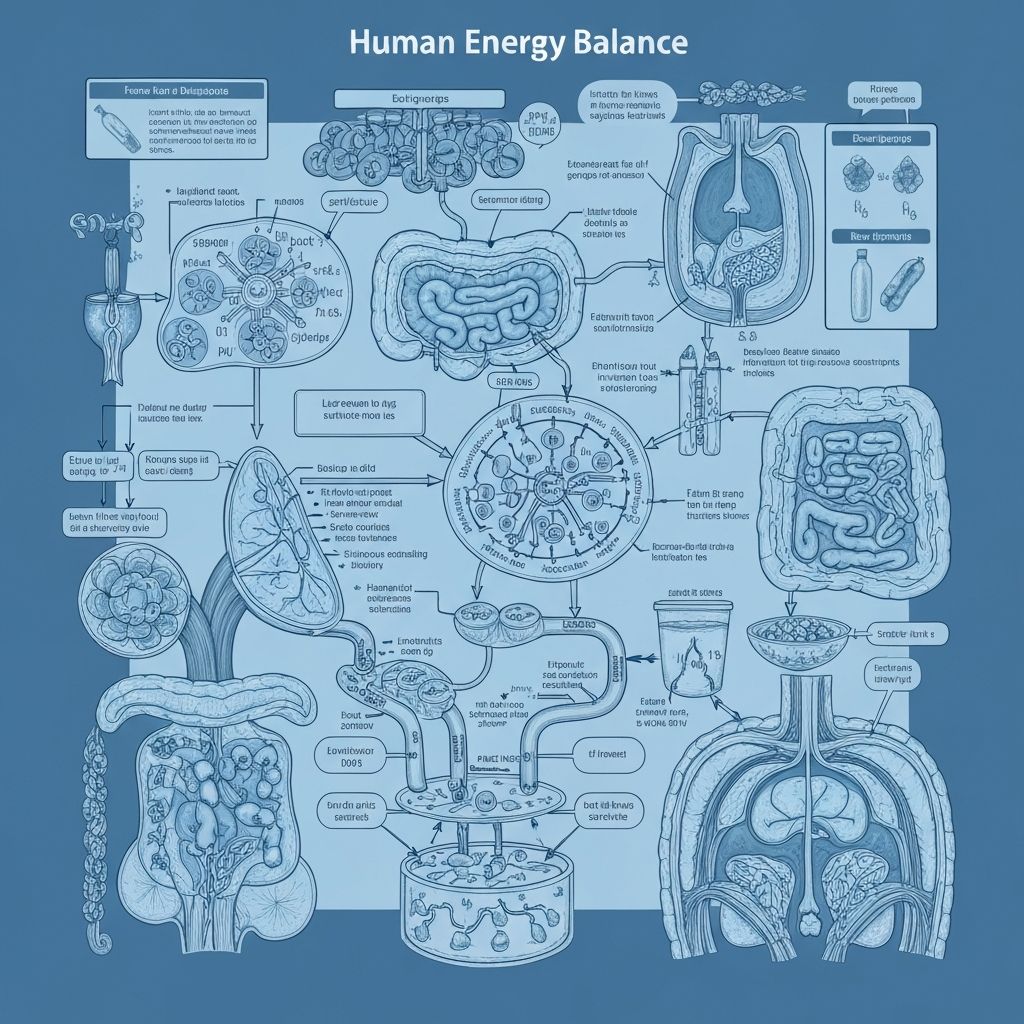
Energy balance represents the relationship between energy consumed through food and energy expended through metabolic and physical activity. This balance is fundamental to understanding body composition at the physiological level.
Energy Intake and Utilization
The body acquires energy from macronutrients: carbohydrates (4 kilocalories per gram), protein (4 kilocalories per gram), and fat (9 kilocalories per gram). These nutrients undergo various metabolic processes within the body, with different fates depending on metabolic state and cellular energy demands.
Energy Expenditure Components
Total daily energy expenditure comprises three primary components: basal metabolic rate (energy required for fundamental physiological functions at rest), thermic effect of food (energy required to digest and process nutrients), and activity energy expenditure (energy used for physical movement and exercise).
The Energy Balance Equation
Body composition changes reflect the cumulative energy balance over time. When energy intake exceeds expenditure, the body stores excess energy primarily as adipose tissue. When expenditure exceeds intake, the body mobilizes stored energy and can lose adipose tissue and other tissues.
Metabolic Adaptation
The body does not maintain constant energy expenditure when energy intake changes. During periods of restricted energy intake, metabolic rate can decrease through mechanisms including reduced physical activity, decreased energy cost of digestion, and suppression of energy-expensive processes. During periods of excess energy intake, metabolic rate may increase slightly.
Nutrient Partitioning
In the context of energy balance, different macronutrients have different metabolic fates. Carbohydrates and protein have higher thermic effects than fat, meaning a larger proportion of energy from these nutrients is used in digestion and processing. Fat has a lower thermic effect and is more readily stored in adipose tissue.
Educational Context
This article explains physiological mechanisms of energy balance based on research findings. It does not provide recommendations for individual energy intake, dietary modification, or body composition changes. Individual circumstances vary substantially based on genetics, health status, and other factors. Consult healthcare professionals for personal guidance.